Some of Australia’s best campsites sit at the end of a gravel road. That’s part of the adventure. But gravel driving asks something different of us and our rigs than the highway does. A little preparation goes a long way toward keeping the freedom of the open road exactly that – free and safe.
Before You Go
Start with your tyres. Lowering pressure slightly on gravel improves grip and reduces the jolting from corrugations. Make sure you check your vehicle handbook for the recommended range before you adjust anything, and don’t forget to reinflate your tyres once you’re back on sealed roads.
Give your rig a once-over before any gravel stretch:
- Check tyre tread and condition, including your spare
- Inspect the tow hitch, safety chains and electrical connections if you’re towing
- Secure loose items inside – gravel roads shake things loose fast
- Top up fuel and water; servo stops can be far apart out here
Check road conditions and weather too. A gravel road that’s firm and fast in the dry can turn to a slippery, rutted mess after rain. If there’s been recent rainfall, or more is forecast, it pays to ask locally before committing.
On the Road
Slow down. It’s the single best piece of advice for gravel driving. Lower speeds give you more time to react to corrugations, potholes and loose surfaces, and they reduce the dust cloud you leave behind for the driver following you.
Keep a longer following distance than you would on bitumen. Dust reduces visibility for you and for anyone behind you and stopping distances on gravel are longer than they look.
Hold the wheel lightly but firmly and avoid sudden steering or braking inputs. If your rear wheels start to slide, ease off the accelerator and steer gently in the direction you want to go, resist the urge to brake hard or overcorrect.
Corrugations (those regular ripple patterns across the road) are easier to manage at a steady, moderate speed than crawling or rushing. Find the speed that smooths the ride and hold it.
When you see oncoming traffic, especially trucks or road trains, slow down and move left. Loose stones thrown up by passing vehicles can crack windscreens and chip paintwork, so give extra room where you can.
Towing on Gravel
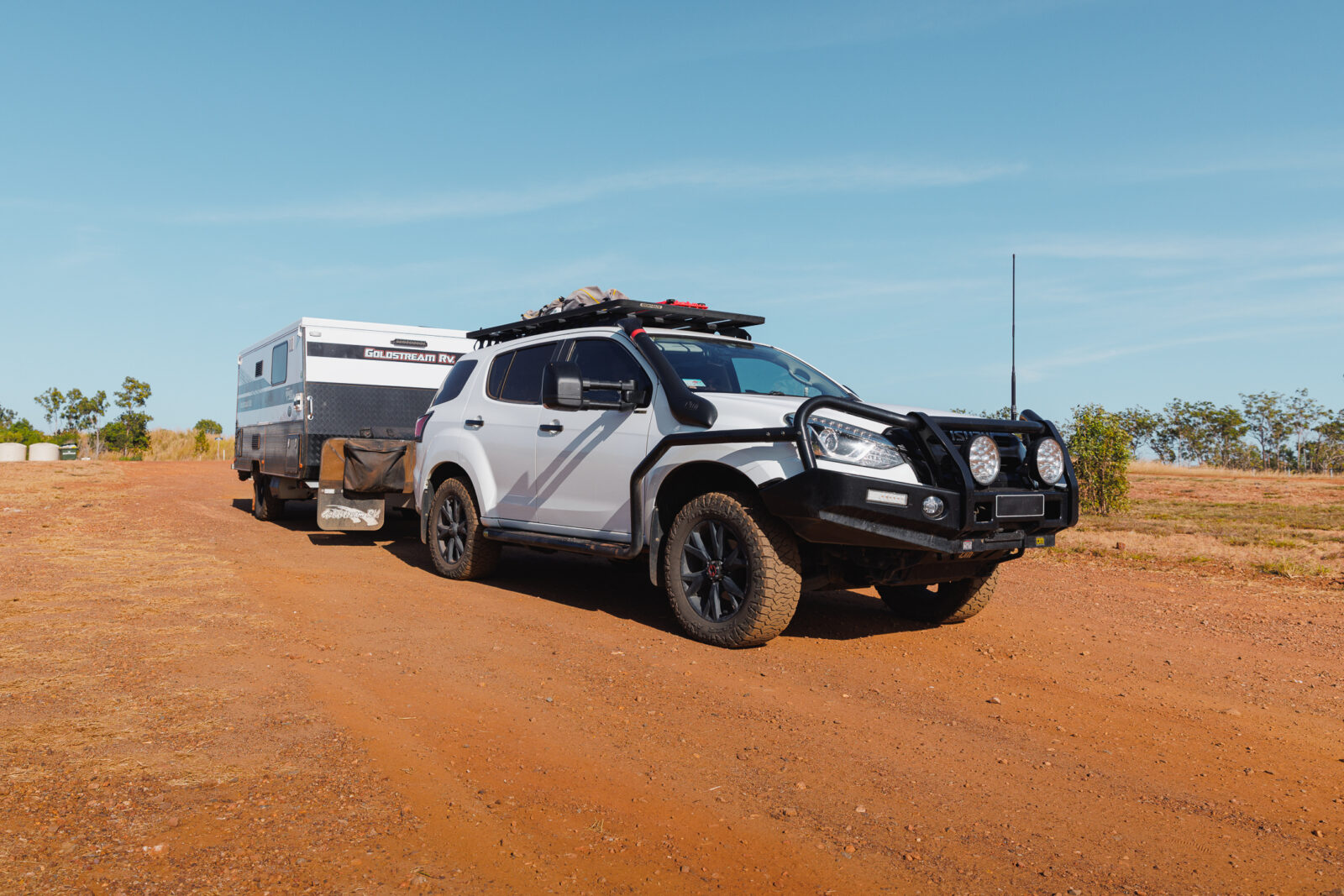
If you’re towing a caravan or camper trailer, gravel adds extra variables. Reduce your speed further than you would in a solo vehicle and watch for trailer sway, a sign you’re pushing too fast for the surface. Regularly inspect your vehicle during stops, checking tyres, wheel nuts, suspension components and any items stored inside the RV that could have shifted during travel.
A Few More Things to Watch For
- Dust: Turn your headlights on, even in daylight, so oncoming and following vehicles can see you through the haze.
- Wildlife: Gravel roads often run through remote country. Dawn and dusk bring higher risk of animals on the road, so stay alert and avoid driving during these times if you can.
- Creek crossings and floodways: Never assume depth or surface stability. If in doubt, don’t cross.
- Mobile coverage: It’s often patchy or absent. Let someone know your route and expected arrival time before you head off.
Enjoy the Journey
Gravel roads are often where the best of Australia opens up, quiet campsites, big skies, and the kind of solitude you don’t find on the highway. With the right prep and a steady hand, they’re well within reach for RVers exploring further afield. Slow down, stay alert, and the freedom of the road is yours.