Summer is a great time to explore Australia, but it’s also bushfire season. As RVers, we’re often in unfamiliar country, camped in the bush and far from help. A little planning keeps us safe and free to enjoy the road.
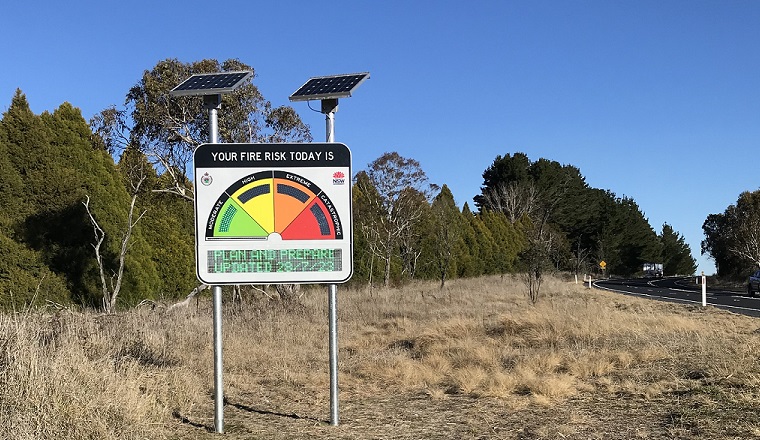
Know the Fire Danger Rating
- Moderate: Plan and prepare.
- High: Be ready to act.
- Extreme: Take action now to protect your life.
- Catastrophic: For your survival, leave bushfire risk areas.
Check the rating every day for where you are and where you’re heading. It can change overnight.
Know the warnings
A rating tells you how dangerous a fire would be. A warning means a fire is burning. The three levels are Advice, Watch and Act and Emergency Warning.
Don’t wait for an Emergency Warning before you move. With a big rig and narrow roads, we need more time than most.
Stay connected
Set up the warning service for each state you’ll visit:
- NSW and ACT: Hazards Near Me app (also esa.act.gov.au)
- Victoria: VicEmergency app
- Queensland: fire.qld.gov.au (Current warnings and incidents)
- South Australia: Alert SA app
- Western Australia: Emergency WA app
- Tasmania: TasALERT
- Northern Territory: SecureNT website
Set “watch zones” for where you’re staying and travelling. ABC Local Radio is the official emergency broadcaster and works where mobile coverage doesn’t.
Cooking on a Total Fire Ban day
Wood and charcoal fires are banned almost everywhere. Gas and electric cooking is usually allowed, with conditions:
- NSW: Gas barbecues are allowed only within 20 m of a permanent home or in an approved picnic area, with an adult attending, 2 m cleared and water on hand. Portable gas and electric barbecues are banned in national parks, state forests and regional parks.
- Victoria: Gas or electric barbecues and portable gas stoves are allowed if the wind is under 10 km/h, there’s 3 m cleared around and above, a hose or 10 litres of water is ready, and someone stays until the cooker is off. Liquid-fuel cookers are banned.
- Queensland: Queensland has local fire bans rather than Total Fire Bans. Gas, electric and spirit cookers are allowed if they’re contained, attended and can’t throw embers. Extra rules apply in national parks.
- South Australia: Gas or electric only, within 15 m of a home or business or on a coastal foreshore. You need 4 m cleared, someone in control and an extinguisher at hand. Some caravan parks and picnic areas are council-approved, so look for signs.
- Western Australia: Gas with an enclosed flame is allowed at home or in an authorised area such as a public park, with 5 m cleared. Electric barbecues with no flame are allowed. Exposed flames and metho or kerosene cookers are banned.
- Tasmania: Electric and LPG cookers are allowed with 1 m cleared. Metho and shellite stoves are banned.
- ACT: Gas or electric is allowed with constant adult supervision, a clear area, and water or an extinguisher. Gas barbecues in parks are switched off.
- Northern Territory: Gas and coal barbecues are allowed during a fire ban. A small cooking fire is allowed with 4 m cleared, someone always present, and the fire put out straight after.
If you’re unsure, have a cold meal. Fines are heavy, and one spark can destroy homes and lives.
Leave early
On Extreme or Catastrophic days, stay out of bushfire-prone areas. Head to a town or lower-risk area the day before. Never drive towards a fire or into smoke.
Wherever you camp, know two ways out. Park facing your exit, keep your fuel tank at least half full, and keep the rig ready to roll: awnings in, gear packed, and water and medications on hand.
Before you go
Pack a grab bag with water, a torch, a first aid kit, medications, copies of important documents and a phone charger. Tell someone your travel plans.
Being fire-ready doesn’t mean staying home. It means travelling smart, so we can all enjoy many more summers on the road together.